Your State, Your Obligations: A Parent's Legal Roadmap for Britax ClickTight Recall Compliance Across All 50 States
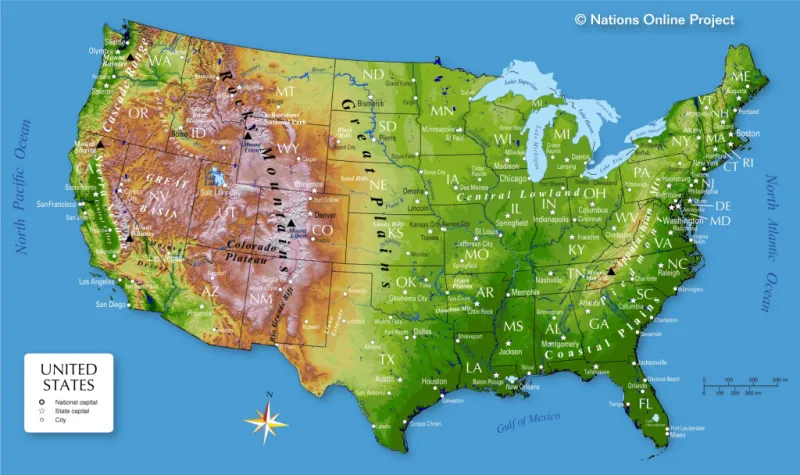
Photo: US map legal documents child car seat safety law compliance, via printable-us-map.com
Federal recall law establishes the floor. State law, traffic codes, and civil liability frameworks build the walls and ceiling of the legal environment in which American parents actually operate. For families managing an active Britax ClickTight recall, understanding that environment — not just the manufacturer's instructions or NHTSA's general guidance — is essential to making fully informed decisions about compliance, timing, and risk.
This guide does not constitute legal advice, and parents with specific liability concerns should consult a licensed attorney in their jurisdiction. What it does provide is a structured overview of the legal landscape as it applies to car seat recalls across the United States, with particular attention to the distinctions that matter most for ClickTight owners.
The Federal Baseline: What NHTSA Requires and What It Does Not
The National Traffic and Motor Vehicle Safety Act, administered by NHTSA, governs the recall process for child restraint systems sold in the United States. Under this framework, manufacturers are legally required to notify registered owners of recalled products, provide a free remedy, and report recall-related data to NHTSA on an ongoing basis.
Critically, however, federal law does not require parents to complete a recall remedy. There is no federal statute that makes it illegal to continue using a recalled car seat pending the completion of a remedy. NHTSA can compel manufacturers to act; it cannot compel consumers to respond.
This distinction is widely misunderstood. Many parents assume that receiving a recall notice creates an immediate legal obligation to stop using the seat. In most circumstances, under federal law alone, it does not. The obligation that federal law creates falls on the manufacturer, not the consumer.
What changes the calculus significantly, however, is state law — and in some circumstances, the civil liability framework that governs what happens when a recalled product is involved in an accident.
State Child Passenger Safety Laws and Their Recall Implications
Every US state has enacted child passenger safety legislation establishing minimum requirements for how children must be restrained in motor vehicles. These laws vary in their specificity, their enforcement mechanisms, and their interaction with product recalls.
States with explicit recalled-product prohibitions: A small number of states have enacted provisions that specifically address the use of recalled child safety products in vehicles. California's vehicle code, for example, includes language that can be interpreted to prohibit the use of a child restraint that is subject to an open safety recall, depending on the nature of the recall and the enforcing officer's discretion. Parents in California with open ClickTight recalls face a higher legal exposure than their counterparts in states with no analogous provision.
States with general safety standard requirements: The majority of states require that child restraints used within their jurisdiction meet applicable federal safety standards. When a product is under active recall for a safety-relevant defect, a credible argument exists in many of these states that the seat no longer satisfies the "meets federal safety standards" criterion that the law requires. This is not a settled legal question, but it is one that parents and their attorneys have raised in civil proceedings following accidents involving recalled seats.
States with strict liability frameworks: Several states, including New Jersey, apply strict product liability standards in personal injury cases. In these jurisdictions, a manufacturer's issuance of a recall is treated as an acknowledgment that the product was defective at the time of sale. For parents, this cuts both ways: it strengthens potential claims against the manufacturer if a recalled seat fails in a crash, but it may also complicate their own legal position if they continued using a seat after receiving recall notification and an injury results.
The Liability Question: What Happens If a Recalled Seat Is Involved in an Accident
This is the question most parents do not want to ask — and the one most important to answer honestly.
In US civil courts, the legal concept of contributory or comparative negligence applies in most jurisdictions. Under this doctrine, a parent who continued using a seat after receiving a recall notice — and whose child was injured in a crash — may be found to have contributed to the injury through their own failure to act. The degree to which this affects legal outcomes varies by state.
In states that apply pure contributory negligence standards (Alabama, Maryland, North Carolina, Virginia, and Washington D.C. as of this writing), a finding that the parent contributed even minimally to the harm can bar recovery entirely. In states applying comparative fault standards — the majority of US jurisdictions — the parent's recovery may be reduced in proportion to their share of responsibility.
The practical implication is significant: in a collision involving a child restrained in a seat under active recall, the existence of an unaddressed recall notice may be introduced as evidence of parental negligence. Whether that argument succeeds depends on the specific facts, the state's legal standards, and the nature of the recall defect. But the risk is real, and it is not theoretical.
Rights Parents Retain Throughout the Recall Process
The legal framework also provides important protections for families who engage with the recall process in good faith.
The right to a free remedy. Federal law unambiguously requires manufacturers to provide a recall remedy at no cost to the consumer. For Britax ClickTight recalls, this has historically taken the form of replacement components, updated hardware, or in some cases full seat replacement. Parents who are told otherwise, or who encounter barriers to accessing the remedy, should report those barriers directly to NHTSA.
The right to documentation. Parents who complete a recall remedy are entitled to written confirmation of that completion. Maintaining this documentation is important not only for personal records but as evidence of good-faith compliance in any future legal proceeding.
The right to file complaints. If a manufacturer fails to provide timely notification, delays the remedy process unreasonably, or provides a remedy that does not resolve the identified defect, parents have the right to file a complaint with NHTSA. These complaints inform NHTSA's ongoing oversight of manufacturer compliance and can trigger additional regulatory action.
A State-Specific Checklist for ClickTight Owners
Given the complexity of the state-by-state legal landscape, the following checklist provides a practical starting point for parents in any jurisdiction.
- Look up your state's child passenger safety law on NHTSA's state law database to understand the specific requirements applicable to your vehicle and your child's age and weight.
- Check whether your state has any explicit recalled-product provisions by searching your state's department of transportation website or consulting a local attorney.
- Confirm the current recall status of your specific ClickTight model on NHTSA's SaferCar.gov recall lookup tool using your seat's model number.
- Register your seat with Britax if you have not already done so, to ensure you receive direct manufacturer notification of any future recalls.
- Complete open recall remedies promptly and retain all documentation of completion.
- Consult a licensed attorney in your state if you have specific concerns about liability exposure related to a recalled seat.
The recall process is not merely a manufacturer obligation or a federal regulatory formality. In the context of state law and civil liability, it is a legal event with consequences that extend into parents' daily driving decisions. Understanding those consequences — and acting on them — is part of what it means to keep children safe on American roads.